
 I'd done this sample zoo bg to give a purple elephant a place to dance, but the job ended before we got to him. Thankfully, this fellow showed up a little later...
Monday, March 16, 2009


Tales of the Koko Lion, Part 7: Animated Memories

Many moons ago when I was 18, I sat on a planter in front of my sister's little hippy boutique, "Satin Rainbow," in the (then) sleepy seaside hippy hamlet of Del Mar, California, sketching in a pad just for fun, when a lovely blonde came by and took an interest in what I was drawing. She got her father, a prominent California Designer/Art Director named Don McQuiston to come and look. He asked me to do a group of drawings and bring them to his office the next week. That was how I got started professionally.
He hired me to do some drawings for textbooks he was designing, and sent me to a class at a local junior college that was being taught by an up-and-coming young illustrator named Everett Peck. Everett and I became good friends, and during the course of his class, I assembled a portfolio of sorts. Eventually, I submitted it to Art Center College, and was accepted.
After my second term, I needed work badly, and Everett referred me to a fellow named Frank Terry, a popular animation director who worked out of a studio in Venice, Calif. I walked into his studio with my student portfolio under my arm, and met Frank, sketching at a long table across from another guy, named Ed Koren. They were both nice guys.
Being from out in the coyote canyons, I wasn't really familiar with The New Yorker magazine, or with the quirky, elegant cocktail party "hairy monsters" Mr. Koren created for the comics in that august publication. They hired me to report to Duck Soup Produckions in Santa Monica, and go to work inking a pair of animated commercials that featured Mr. Koren's characters sipping Lancer's Rose. I was about to get my first big lesson in animation.

Inking any character for fluid animation is a challenge, but particularly those dang hairy monsters – each of them constructed of hundreds of wobbly dip-pen lines. A certain amount of "crawl" was unavoidable, but the client hit the ceiling watching our first samples flutter and bristle like some kind of wild pen-and-ink mitosis. After a while, I got the hang of it, creating a series of "anchor lines" that rode the action of Frank's rough animation sketches (I got to do the pencil clean-ups first, of course). In the end, the crawl was kept to a minimum, and I had my first taste of that unique gratification that comes from seeing animation that you've contributed to up alive on the screen.
I quit school halfway (I was getting married, and seemed to have lots of work), and for the next couple years I did backgrounds, in-betweens, and development art for Duck Soup, for the wonderfully creative Roger Chouinard, and his wise and funny partner, Duane Crowther. I didn't know what UPA was at the time, and it took years for me to realize that Duane was one of the founders of that whole school of brilliantly influential, "Cartoon Modern," that so much of my work since has been based on. I sat by an old-timer named Amby Paliwoda a lot, a veteran of Disney's Golden Age, who regaled me with stories of the Disney days, and his best buddy, Grim Natwick (a good friend of Duane's, as well). I'm afraid I drove him a little crazy with my "left wing" politics at the time. He loved him some Ronald Reagan. We worked with a great background artist named Toby Bluth, who's brother Don was just starting up a feature studio at the time. And every once and a while, a remarkable artist and character, Cornelius Cole, came into work on projects, mostly Froot Loop commercials; but I recall staying late a couple nights to help Corny with his section of Heavy Metal – a brilliant piece of "limited" animation that was eventually cut from the final picture, because it "didn't fit in" with the rest of the anthology. I understand there are versions of the film that have his section restored.
Corny was a gas, not just because of his incredible talent or his wonderfully kind nature, but also because he was a guy who generated great apocryphal stories, some of which I know were true. He dressed kind of like Gilligan but with a ragged "Panama" hat, and carried a big broken-handled vinyl suitcase full of hundreds of pencil-ends and blobby ball-points that he'd dig through until he found just the right ones; then he blew up a big beach ball, and laid on top of it (to save wear-and-tear on his back), drawing genius stuff on the floor. My favorite Corny story was that while he was working on all those Warner Brothers cartoonys (that kept me glued to the TV as a kid), he'd lost the forward gears in his transmission, and so drove in reverse from Coldwater Canyon to Burbank every day to work, mostly along the shoulder of the road. Though I'm not sure if that one's true...
Once, when I was doing b.g.s for a series of "Mrs. Smith's Pies" commercials, I had to lay out and paint views of Pottstown (home of Mrs. Smith) ablaze in fall colors. I was from the Southern California outback. I had never seen fall colors. So I got a National Geographic for reference, and proceeded to paint everything yellow and orange. Duane looked over my shoulder at my work-in-progress and wryly asked, "Have you ever heard of 'Impressionism'?" Of course, I said yes, but I didn't really know what he meant.
Corny was faculty at Cal Arts for many years, from what I understand. Frank retired as head of the department there, and passed away a couple years back. Duane shuffled off this coil just after the millenium. Until recently, Roger was still at his studio (called simply Duck now), and is still wonderfully creative. I went on to many years of illustration, never looking back, or realizing how great all those people really were, until I got back into animation in 1999.
I was quite unconscious way back in those days. I didn't get there because I'd been such a fan of it all, I was just doing my best to pay my rent. When I look back, I know how lucky I was, and though I still often find myself "between projects," I realize that by drawing for a living...how lucky I've always been.
Sunday, March 8, 2009
2D design to 3D design
 Designing for 3D requires a lot of architecture. As you see here, not only for architectural locations, but also for the creation of characters. It's necessary to be technically specific even when it comes to aspects of the character's "charm." Notice how the "a" changed from the plan drawing to the color model, to enhance legibility.
 ...this 3/4 rear drawing is by the very talented Kevin Kobasic, who did the original turn-arounds of the cat character, as well as a lot of other characters on the show.

Here's my first take at 3D design, a couple years ago in a film I did for Herman Miller called "Purple," where fixtures came to life...
Tales of the Koko Lion: Great Uncle Cy and the Man in Black, Part 2
The back shed workshop was was full of bad taxidermy and mysterious tools and devices of unknown origin and use. Old pictures and obscure signage. Switches and bricks and rifles on a rack. It was like a dusty, sublime form of heaven to me, the crazy stuffed raccoons and antiquated firearms ranking well above angels' wings, harps, and cherubs in Mildred's little proper house up front.
My eyes lit upon a fascinating device on the old wooden everything-table near me, as Cy lowered the needle on a spinning LP he'd pulled out of a milk carton under the table. A shuffling western guitar started as I picked up the odd contraption to examine it. It was about a two-foot long aluminum tube bent around like a folded infinity sign. There were long, orangey rubber surgical tubes dangling off of it, meeting at a leather pouch gripped by a clothespin. It was a super-powerful slingshot extraordinaire – a "Wrist Rocket."
"I hear that train a-rollin', it's comin' 'round the bend..." Cy snuck the volume up a little as he lifted his his great eyebrows and widened his eyes. He shusshed me with his finger over his pursed lips as he held the album up for me to see the angled photograph of a handsome, dangerous man with black shiny hair looking down at me from the cover. It was "Johnny Cash – Live at Folsom Prison." Cy smiled broadly, his bottom teeth jutting out as they did.
"...Well, I shot a man in Reno, just to watch him die." Hoots and hollers from the audience of inmates, as I slipped my slender arm through the slingshot loop and grasped the handle with my left hand, slightly pulling up the clothespin with my right.
"There's ball bearins' in that, fer when them rabbits and dogs git in my bean patch, Bobby." Cy whispered through his deep, conspiratorial smile.
I gingerly tested the pull on the wrist-rocket, testing deeper and deeper into the elastic potential as Cy tapped his foot and grinned. I pulled it back hard to my cheek, and right at the moment the Man in Black hollered "My name is SUE — HOW DO YOU DO? NOW YOU'RE GONNA DIE!!" and Cy's eyes popped open with glee, the clothespin released and the air was shattered by the whip-snapping surgical tubes, and splintering crunch and crash of ball-bearings violently ricocheting around the room! Uncle Cy quick turned the music down, his eyes wide as saucers.
We traced the trajectory of the slingshot to where the ball-bearings had torn a large, ragged chunk from the heavy table leg just an inch or two from Cy's shin. In unison, our eyes slowly scanned up from the damage an inch from his unscathed shin and met – his huge eyebrows raised high.
"Why Bobby!" he said, chin curled up to meet his nose, "...you damn near took my leg off!"
All of a sudden the door flung open, and there stood Mildred red-faced, fists clenched.
"Cyrus Fletcher! What do you think you're doin'– fillin' that poor little boy's head with that prison-house pison! You get outta there this minute!"
"Why Mildred, we wuz just..." Cy feebly tried to explain.
"Save yer excuses fer someone who don't know any better! Now you come with me right this minute, Bobby!"
It was the most I'd ever heard her say at one time. She stood resolute, pointing back down the hall, and I shuffled out past her, looking back to see Cy, sheepishly sliding the black record back into it's sleeve. Our eyes met again, and we both looked at the damaged table leg, and then back to our silent agreement. He smiled a little because he knew, like I did, that getting caught by Mildred had been completely worth it. There could've been no better introduction to The Man in Black, Mr. Johnny Cash, who – to this day – rides with me wherever I go.

"The ancient masters were profound and subtle. Their wisdom was unfathomable. There is no way to describe it: all we can describe is their appearance."
The Tao Te Ching, 15
The first book: How to Survive Life (and Death), A Guide To Happiness In This World and Beyond, based on lessons (learned the hard way) by a three time Near Death survivor is now available everywhere – but order it at your local bookstore! The latest book: How to Get to Heaven (Without Really Dying) is available now from Llewellyn Worldwide.
Thursday, March 5, 2009

Tales of the Koko Lion: Great Uncle Cy and the Man in Black, Part1

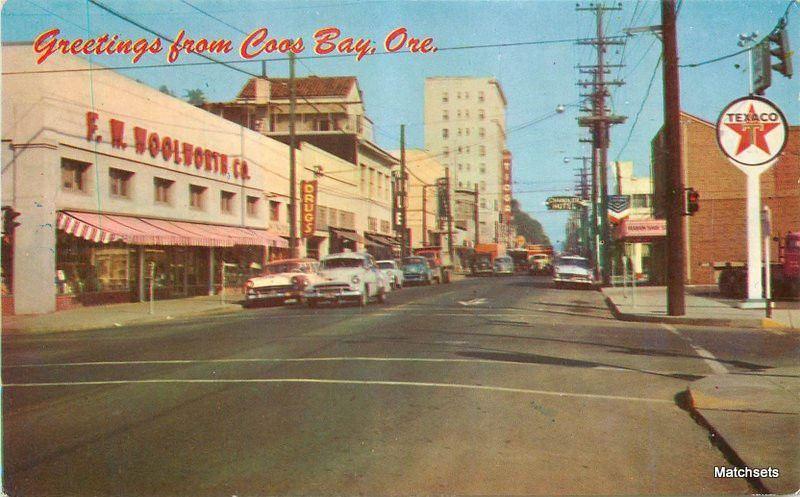
Each summer, my mother would pile us into the white Impala station wagon, and head north to visit her sisters in L.A. and Oakland; then proceed with us up the coast through Northern California and into Oregon, to her family's hometowns: Grant's Pass, Coos Bay, Eugene...sometimes stopping to gather agates, or search for signs of Bigfoot. In Coos Bay, we'd visit my wonderfully authentic (and eccentric) Uncle Cy, and his wife, Mildred.
As a teenager in Oregon, Cyrus Fletcher sported patent-leather hair, in the style of Rudolph Valentino and John Gilbert. He'd split the legs of his denims up the side, and sew leather triangles into them to make his own vaquero-style boot jeans. He jumped on his belt-driven motorcycle, made mostly of wood, and rode it from Oregon down the San Joaquin Valley to Hollywood, to become a moving-picture star in the days before "talkies." He never hit the big time, but he flirted with it – he was one of a "cast of thousands" in the original Ben-Hur, and went on to do a stint as chauffeur to a famous silent-film comedian, Ben Turpin, a forgotten superstar best known for his very crossed eyes.
Cy and his wife, Mildred, seemed to have little in common, he being gregarious in the extreme, and she as stoic and taciturn as the old gal in "American Gothic." They did possess one notably obvious complement that may have explained their long, successful marriage. Cy had a remarkably pronounced underbite that jutted out from under his nose, and yin to his yang, Mildred had an overbite that could only be described as Simpsons-like. In profile, if not from any other angle, they were a perfect fit.
It wasn't just Cy's overbite that was remarkable. He was an amazing natural storyteller. When he entered "Critter-Callin'" competitions in local fairs, the tales he spun immediately before beginning his wooden whistle critter-call repetoire so delighted the crowds, that he became a sought after Storyteller, engaged by oral history buffs from town to town, just to sit and tell his rich and wildly funny stories.
As a kid, I liked him because he was so funny, and he had lots and lots of cool stuff, especially in his amazing workshop out back. Railroad sets, compound bows, "critter-callin'" whistles, dagguereotypes, and a very interesting record collection. (With an older brother and sister who were part of the Surf Explosion and English Invasion, a mom who loved Broadway show tunes and Sinatra, and my favorite themes from cartoon and cowboy TV shows, music had already become a big part of my young life).
In the evenings we would struggle through another of Mildred's afternoon-early and impossibly bland "suppertimes." She was a cook in an elementary school cafeteria, and had made uniquely creative dishes that the kids would like. For example, she put scoops of cottage cheese on slices of baloney, criss-crossed them with strips of individually-wrapped cheese slices, and baked them until the baloney edges curled up around the bubbling blob. Ironically, she called them "Flying Saucers." She served them with catsup and bread-and-butter pickles.
After supper, Cy gave me the secret up-and-down signal with his overgrown eyebrows that meant I was supposed to wait a bit, and then follow him, because he had something to show me that Mildred might not approve of. He patted the arms of his easy chair, thrust out his lower jaw, raised his great eyebrows again and hoisted himself up, dawdling down the hallway towards his workshop. I waited awhile, and innocently followed like I heard the call of nature. I did, and it was the mischevious nature that Uncle Cy and I shared. Cy cautiously peeked through the cracked door of his workshop, opened the door, and hurried me in.
"We're gonna have to keep this quiet, Bobby. Mildred'd have a tizzy if she caught on." I greedily scanned the room, letting the amazing contents flood my little boy's eyes as Cy lifted the lid on his little record player, and reached into his wooden milk crate full of records.
...to be continued in Part 2
The first book: How to Survive Life (and Death), A Guide To Happiness In This World and Beyond, based on lessons (learned the hard way) by a three time Near Death survivor is now available everywhere – but order it at your local bookstore! The latest book: How to Get to Heaven (Without Really Dying) is available now from Llewellyn Worldwide.
Saturday, February 28, 2009

Signs of Shifting Times
You may find yourself worrying, in the midst of all these difficulties, can things really change for the better? Here's a few very recent signs of the shift that I picked up on last night's media:
How can you contribute to this change, and elegantly support this colossal shift? Simply know in your heart that these changes are coming. Forgive the spiritually sick immediately, and be of service to one another. If that sounds pretty easy, it's because it is. All it takes to help the occult fear-grounded powerbase (dark) find the door, is to surround yourself with the conditions you want (light). Gandhi said something like, "...be the change you seek." In the meantime, check out the YouTube link called "Ian Lungold Lecture" in my site link column. There are some great ideas about the change that's coming there. Blessings!
- On Countdown with Keith Olbermann, there were two powerful signs of cultural awareness. The first case was Chris Hayes from The Nation discussing the fact that inside the beltway in D.C., the media is "hard-wired" to the The Right, and so continues to give equal time or better to Republican talking points that were rejected by a large majority in the last election. If you voted as most people did in the last election, and you watch network and cable news, you know this is true. Last night was the first time I've ever heard that said aloud on network. You will hear it pointed out more often. Awareness precedes change, and exposure to the truth precedes awareness. Besides, the election told the true story.
- Also on that show was an interview with Janeane Garofalo where she talked about Rush Limbaugh, and those who follow him, in a very honest way- more accurately and candidly than I've ever heard expressed on major media. In the last 1:20 of the interview in particular, she defines a form of spiritual sickness that affects a lot of people which she kindly refers to as "human frailty." We're not hearing the word spiritual used quite yet, but it's contained there nonetheless.
- President Obama, in the submission of his first budget to Congress, has created the standard that all costs will be honestly and accurately represented. This indicates a major shift in the approach to the budgeting process that has never been attempted before. Just the intent to institute this standard represents a huge shift towards ethics in our government. Mr. Obama's election and principles represents this shift on an overall larger cultural scale, as you already know intuitively.
- Something not so topical, but equally indicative that those on-line may have already considered, is the simple corporate motto of Google: "Don't Do Evil." That the world's most influential corporation would aspire to that simple level of ethical behavior is truly remarkable, and indicates massive change in the direction our society is heading. Imagine if our government and Wall Street adhered to that simple axiom. In the future, they will have to.
Friday, February 27, 2009

Tips for Happiness #3

3. Radical Surrender
This last of these three "Tips for Happiness" is aimed at those who really need it. Those who are going through the inevitable difficulties life dishes up to all of us at one time or another. You may not need these tips so much if you're already pretty happy, but "Radical Surrender" can be so effective for those suffering hard times, that it's an extraordinarily effective means for assuring continuing happiness as well. This is surrender not in the sense of resignation, of "giving up" in a pejorative sense, but of surrender as a strategy, as a way to deal with life on life's terms. Surrender in the sense of joining the winning side.
All through mythology and mysticism, in the quest for wholeness, there's the need to pass through "the darkest hour" to reach the place of light; of acceptance, self-love, and love and compassion for others. And that darkness will happen in every life, so resistance to it only energizes that period with more negativity. In recovery movements, there's the expression: "When you're going through Hell, keep going!" And: "Pain is the touchstone of spiritual growth." It may not be much consolation at a particularly painful time to try to realize it as a great opportunity for growth and learning. Indeed, it may be a pretty tall order to do so. But this is a first step towards learning to energize every event in your life, "good" and "bad," in a positive, growth-inducing way. After all, when you look back at the hardest times in your life, they're over, aren't they? And you are still here, and all the better for the experience.
Surrendering to the broken-openness brought about by your suffering will allow healing energy in, so you can grow out through that break, like a wildflower growing through a crack in the pavement. You may wisely never want to go through something like that again, and because of the wisdom gained from the experience you've had, you may never have to. Of course, you can't do it alone, so it requires surrender in the sense of accepting the company and care of others as well.
Surrendering to the broken-openness brought about by your suffering will allow healing energy in, so you can grow out through that break, like a wildflower growing through a crack in the pavement. You may wisely never want to go through something like that again, and because of the wisdom gained from the experience you've had, you may never have to. Of course, you can't do it alone, so it requires surrender in the sense of accepting the company and care of others as well.
"Yeshua said: Blessed are those who have undergone ordeals. They have entered into life."
Logion 58, The Gospel of Thomas
Then, even if (when) similar painful circumstances arise again, you can say (as crazy as it may sound): Here's a chance to learn something I will need to know for the future. This is not really going to be bad at all – in fact, it's going to be very rewarding. I need to be here. I need to learn this. In this way, you can bring a new consciousness to a difficult (but familiar) situation, and completely transform the nature of the experience from one of resistance and pain, to one of acceptance and growth.
For someone who's basically happy already, and only experiencing minor setbacks, practicing this type of strategic surrender will just support and strengthen the happiness you already have.
"When you put your boat in the river, go downstream."
Abraham (via Esther Phillips)
Read about this and much more in: How to Get to Heaven (Without Really Dying), Wisdom From a Near-Death Survivor from Llewellyn Worldwide available direct on this page, or online. The first book: How to Survive Life (and Death), A Guide To Happiness In This World and Beyond is available the same ways – but ask for it it at your local bookstore!
Monday, February 23, 2009

Tales: Tips for Happiness #2

2. Radical Forgiveness
As best as you possibly can, at all times of your life, practice what I'll call "Radical Forgiveness," meaning that whenever anyone does anything to you that you perceive as (or that truly is) offensive or damaging to you – from stepping in front of you on an escalator to stealing your wife; stiffing you on a job, or sticking you with the check – from "deeply disappointing you" to "ruining your life," forgive them as immediately and completely as possible.
Everyone is fighting the same battles, and many people are doing it with even more insane voices in their head than you may have. Become grateful immediately. Many people are barely conscious in this life. Their lives really may be fairly nightmarish. Like everyone, they need acceptance and tolerance.
Also keep in mind that when someone is doing something that seems hurtful to you, they are actually hurting themselves even more. Since we're all the same thing, they're just exercising a form of self-hatred. You just happen to be in the line of fire. The more you invest it with negative energy, the bigger and badder the experience will become for you, burdening you with unnecessary painful thoughts and residual emotions. It's their karma, not yours, so you needn't carry any for them.
Take the experience as a lesson and opportunity to transcend the petty destructive and unconscious tendencies that human beings unwittingly indulge themselves in, usually in an effort to enhance themselves. See it as an opportunity to deal with another's pain with compassion – the juice that facillitates life's natural ease and elegance. Then you put yourself in a place to help someone, and you suddenly might see that the person who "ruined your life," actually gave you the greatest gift you've ever received: self-awareness, self-love (the willingness to show love to another), and compassion...which all adds up to freedom.
Take the experience as a lesson and opportunity to transcend the petty destructive and unconscious tendencies that human beings unwittingly indulge themselves in, usually in an effort to enhance themselves. See it as an opportunity to deal with another's pain with compassion – the juice that facillitates life's natural ease and elegance. Then you put yourself in a place to help someone, and you suddenly might see that the person who "ruined your life," actually gave you the greatest gift you've ever received: self-awareness, self-love (the willingness to show love to another), and compassion...which all adds up to freedom.
"The work of love is to open that window in the chest
and to look incessantly on the Beloved. You can do this.
Listen. Make a way for yourself inside yourself.
Stop looking in the other way of looking.
You already have the precious mixture that will make you well. Use it.
Old enemies will become friends.
Your beauty will be God's beauty."
Rumi
Friday, February 20, 2009

Tips for Happiness #1

This bit of friendly advice is more or less excerpted from my book, How to Survive Life (and Death), A Guide to Happiness in This World and Beyond, from Conari Press. I call it:
1. Radical Kindness
My first tip for happiness is also the easiest, and the most fun. I call it "Radical Kindness," and it's just what it sounds like. I'll present it to you as a challenge – give it a try for one, or even better, two days, and see if it doesn't completely transform your life in very real ways: the amount of joy you experience, the "magical" connections you make, and the ease and comfort that you feel as you go about your day to day. It's also really exciting!
Here's the challenge: To every person that you encounter, in any and every circumstance you find yourself in during an entire day (or two), be as absolutely kind and loving to that person as you can possibly muster, without acting like a boob. You can't be sarcastic or patronizing- that's thinly veiled aggression, not loving kindness. You must be sincere. Everyone knows how to be sincerely kind, or can make a good effort. Negativity of any kind is resisting kindness, so don't go there at all. Just look people in the eye (smile first with your eyes), smile sincerely (like you have a special secret to share), and be really friendly to them... and watch what happens! Your world will come to life in a way you may never have experienced before. Allies, compatriots, new friends that seem like they're very old friends will appear everywhere. You'll get helped with special care, with insider's knowledge, with joy and camaraderie everywhere you go- sometimes when you'd least expect it.
All you have to do is simply return the favor. Be pleasant and polite, be magnanimous and generous, be tolerant and interested, be honest and real, and the world will activate effervescently in the most wonderful ways. It's the single most effective way to completely transform your life for the better. It will make your life much more fun, and much easier. Open your heart, relax your will, and try this simple happiness challenge!
"None of the means employed to acquire religious merit...has a sixteenth part of the value of loving-kindness. Loving-kindness, which is freedom of the heart, absorbs them all; it glows, it shines, it blazes forth."
The Buddha
Read about this and much more in the new book: How to Get to Heaven (Without Really Dying), Wisdom From a Near-Death Survivor March 2018, from Llewellyn Worldwide— it's available online. The first book: How to Survive Life (and Death), A Guide To Happiness In This World and Beyond is available everywhere – but ask for both at your local bookstore!
Read about this and much more in the new book:
Saturday, February 14, 2009

What You Always Knew About Intuition.

"Thinking is not going to do it."
Carolyn Myss
Look at a time lapse film of a city sometime. Seemingly permanent structures pile up and wear down like sandcastles. So do we. We pile up. We wear down.
Aside from our senses, the two main aspects of our perception that remain functioning in a fairly constant way are our minds, which tells us what mushrooms are safe to eat, or what time we have to go to the dentist; and our intuition – our inner "voice of reason," which is our true connection to source intelligence. Our connection to the mind of the universe.
We never actually learn much from our own minds, we learn with them. Our minds are tools, usually busily running through random options and possibilities, assigning classifications and priorities. Working, wheedling, making associations, stacking them up and taking them apart. We can memorize facts using that power of mental repetition – or call them up by flicking an associative switch at the right moment. We can collect and categorize knowledge in the basket of our mind, but it's our intuition that confirms the truth of that knowledge, and can actually teach us that truth first. Often, our intuition has to wait awhile for our mind to catch up to it.
The mind can be like a leaf blower, noisily pushing up pieces of data, carrying them along in a measured swirl of sorts, keeping them aloft obsessively, or setting them back down behind us, right where we first saw them. How many times have you come to a conclusion, only to realize that deep down you knew the truth of it already? Yet you needed evidence to convince your mind it was true, even though you knew it all along. And what do you say when that happens? You say, "I knew it all along."
That can be the moment in which you become aware of your intuitive self-- the part of you that witnesses your own (sometimes crazy) thinking. in this sense, you are not the person who's doing the thinking. You, your true self, is observing the person doing the thinking.
Here's the certainty: Our bodies are impermanent (at best). Our minds are tools – largely defensive and survival-oriented in nature, that operate by producing thoughts sequentially moment by moment. Many of these thoughts are extraneous and unnecessary, even counter-productive. They can make us do great things, or terrible things. Crazy things. Or all of the above, as is the case for most of us. Many of the dumbest things I've ever done have been very well thought out.
Our intuitions are our true connections to source intelligence, the truth we may eventually learn with our minds. Nothing really great ever happens without intuitive knowledge. That source knowledge is always available to us, immediately and eternally. However, you can never know it by passing over it with your mind, like a leaf blower. You have to practice allowing your intuition to be, to hear it without the noise – without the mind interference. Purposely enter into the eternal moment that we are always actually living in, where your intuition can be heard. Forget about thinking. Try to consciously allow your intuition to do the thinking for you.
Learn to trust and identify with your calm, inner "voice of reason," what the Quakers call, "the still, small voice," as much as you possibly can. Practice consciously living from that Source Intelligence, and watch the results. This is best achieved through practicing meditation.
Listen to the way this great early twentieth century swami describes it (particularly the last sentence):
"Intuition has a fourfold power. [1] A power of revelatory truth-seeing, [2] a power of inspiration or truth-hearing, [3] a power of truth-touch or immediate seizing of significance, which is akin to the ordinary nature of it's intervention in our mental intelligence, [4] a power of true and automatic discrimination of the...exact relation of truth to truth. Intuition can therefore perform all the action of reason – including the function of logical intelligence...but by it's own superior process and with steps that do not fail or falter."
Sri Aurobindo
Aurobindo said that a long time ago. Some of those swamis really know their stuff...
Aurobindo said that a long time ago. Some of those swamis really know their stuff...
The latest book:
Sunday, February 8, 2009

Saturday, February 7, 2009
Tales of the Koko Lion, Part 4: The Ape Man
"Philosophy is really homesickness."
Novalis
Have you ever seen the classic cartoon where an appropriately drunken stork delivers a baby to a family of the wrong species? That was how I tended to feel a lot, from my earliest memories on. Unsure whether I'd been dropped off on the right planet. Easily persuaded that this was all some kind of accident.
I began to adopt an identification with a set of heroes which I'll call The Legion of the Separate. Every one of them had experienced a profound sense of displacement. They had an inability to accept their reality, and so were forced to seek or become something other than what their surroundings would suggest to make of their lives. They had a need to exorcize the sense of a "False Self" that life had foisted upon them, and journey to the real persona that God, in his infinite wisdom, meant for them to discover. I was down with that.
I loved explorers; like Coronado, the first European to explore the American southwest, who set off looking for the lost city of gold, but instead discovered Kansas. Captain Cook, who was symbolically eaten by Nature-men of Polynesia when he discovered the Paradise that he had been cruelly separated from by an Empire of delusional ego. Marco Polo, whose travels presaged the western search for enlightenment in his quest to the Far East, only to be most famously falsely credited for bringing pasta back to Italy. Of course, the Italians already had pasta. They're Italian.
Also, all comic book superheroes; generally victims of some personal tragedy, who'd been further separated from normalcy by their misunderstood and transcendent powers. Compelled to suddenly appear dressed in multicolored tights (branding logos on their chests), save lives, and then disappear into a kind of hyper-anonymity. I tried this out as a child in my sister's dance tights (sans superpowers), and quickly discovered how profoundly confusing it could be.
Let's not forget – Knights on romantically esoteric quests. Gunslingers and samurais, who didn't want to have to kill anyone, but had gotten really good at it in case it was justified (it always was). Demi-gods and mythological heroes, especially those with impossible tasks to perform. But by far, my favorite of all was Tarzan ... ahhh, Tarzan.
It was a common evening, there in the backyard of the little house on Linfield Avenue, right up against the dusty edge of the canyon wilderness that was eastern San Diego in 1962. I was six, sitting towards the top of the pepper tree, up with the young green leaves, and little vermillion berries. I'd taken to climbing trees at an early age, because, naturally, I could not be reached there. I was dressed ( or undressed, as it were) as my favorite hero from The Legion of the Separate. A thin Mexican leather belt kept my hand-towel loincloth in place. A red rubber knife, the silver paint worn off the floppy blade, tucked into it at my side.
I was Tarzan. Displaced and heroic King of the Jungle. Master of the dark wilderness that fate had inexplicably delivered him into. Rendered parentless at birth, living by strength and guile, I scanned the rooftops of the outpost suburban tract with the cool indifference of a Great Ape, methodically picking at my toes. I was crosslegged in the upper branches.
The screen door opened, and my mother walked out, slender and lovely, with her red hair and her brow bunched. She stood beneath my tree, arms crossed, one foot pointed out just so, squinting up at the King of the Jungle.
"I see you up there." No answer.
"Time to come down now, dinner's ready"
"Tarzan no hungry." My Tarzan had little to do with the transcendent hero created by E. R. Burroughs, instead being unfortunately based on the movie character as portrayed by Johnny Weismuller, the famous swimmer.
"Tarzan has to eat dinner. You're already a pretty skinny Tarzan."
"Tarzan no eat your dinner." I imagined feeding on bloody gazelle, I imagine.
"Tarzan will especially no eat if his dinner gets cold."
With that I shifted to a less visible position in the tree, redirecting my savage gaze to the sunset in the west, all silly bright pink and yellow, in the days before smog had reduced every dusk to sad shades of coppery grey. The screen door shut behind her, and I was again, for the moment, stoically content in my treetop. And then Tarzan got hungry.
Subscribe to:
Posts (Atom)


